
Home Affairs is trying to move identity from a photocopy problem to a digital proof problem, and businesses should care about this. If the department delivers even a workable version of its Digital ID plan, banks, insurers, mobile operators, employers, and online platforms could stop asking customers to send the same documents repeatedly just to open an account or finish a compliance check.
The promise is a change in plumbing, not magic. Instead of collecting ID scans, selfies, and duplicate personal details, a business could receive a verified response from the source that issued the identity. If that happens, onboarding gets shorter, fraud becomes harder to fake, and more applications make it to the finish line.
The bottleneck is the process itself
Anyone who has tried to open a bank account, take out insurance, or sign up for a mobile contract knows the routine. Upload an ID copy. Retake the photo because the glare is bad. Submit a selfie. Wait while the system checks the details against another database. Sometimes the process ends there. Sometimes the customer vanishes before the last approval screen.
That friction costs conversions, staff time, and customer trust. A business may have a strong product and a decent price, then lose the prospect at the identity step because the process feels like a paperwork trap dressed up as a digital flow.
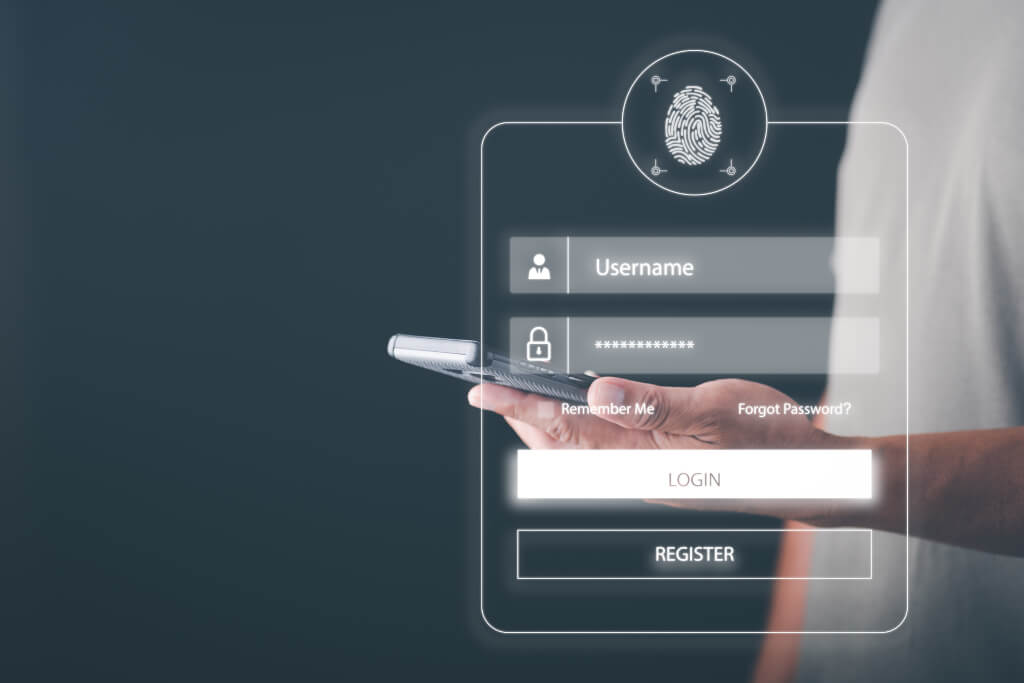
Home Affairs is now building a Digital ID system as part of its 2026 digital overhaul. The department has framed it as a smartphone-based credential for remote authentication. It is not a replacement for the physical Smart ID card. It is closer to a digital counterpart for online interactions, one that should let a person prove who they are without handing over a fresh bundle of documents each time.
This distinction matters for operators. The real change is the possibility of a reusable identity layer that other services can trust, not a prettier upload form.
What the government has confirmed
The confirmed part of the story is narrower than the excitement around it.
Home Affairs says it is developing the Digital ID as part of its broader digitisation plan for 2026. Minister Aaron Motsoaledi said a pilot was already under way in October 2023, starting with Home Affairs employees. The department has also signalled that the system will be phone based and built for remote authentication.
That part is public and concrete.
Everything beyond that, especially private sector integration, sits in a more conditional zone. A bank cannot simply assume access. A telco cannot act as if the switch has already been thrown. A retailer cannot build its onboarding road map around a capability that still has to be defined, tested, and governed.
The sensible reading is that Home Affairs is building the credential and the rails around it. Private companies may eventually plug into those rails, but the terms will decide everything: what data is exposed, how the user approves it, how failure is handled, and how the system behaves when a phone disappears into a taxi seat or gets stolen at a mall.
Until those details are published, any claim about private integration is still a forecast.
What changes for onboarding
If the system lands properly, the biggest immediate change will be boring in the best possible way: fewer repeats, less manual work, and faster approvals.
A bank opening flow no longer needs to start with a scan of an ID document, then a selfie, then a manual review, then a cross-check with separate records, then a callback to the customer because one field failed to match. A digital credential could collapse that chain into a short authentication request, with the Home Affairs system confirming the identity attributes needed for the transaction.
That shift will matter most in regulated sectors. Banking, insurance, and telecommunications spend a lot of effort proving that the person on the screen is the person in the file. Employers and online platforms also suffer from the same problem, even if they talk about it less loudly. Every extra step adds a little more abandonment.
The current model also pushes businesses into document storage they would rather avoid. A copy of an ID, once captured, becomes a liability as well as a compliance record. If a government-backed digital proof can replace that habit with a verified response, the business holds less sensitive material and runs a cleaner verification process.
There is a fraud angle too. Copies of documents are easy to duplicate, alter, or recycle. A live digital authentication against the issuing authority raises the bar. It will not end identity fraud, because no system ends fraud, but it can make document forgery and synthetic identity abuse much harder than they are now.
What the business gets, and what it should not get
The most important design question is also the most neglected one: what exactly does a company receive?
The only workable answer is a limited one. A business should get the attributes needed for a specific transaction, not a view into a person’s entire Home Affairs record. That could mean a name match, an ID number check, an age confirmation, or a verified photo, depending on the use case.
Anything broader would be a mistake. It would also be a privacy problem waiting to happen.
Consent has to sit at the centre of the system. The person using the Digital ID needs to know what is being shared, with whom, for what purpose, and for how long. POPIA is not a decorative reference here; it is the legal frame that will decide whether this system becomes useful infrastructure or another government tech project that people tolerate but do not trust.
The design that makes sense is one where the citizen approves each disclosure through the app, or at least approves clear categories of disclosure. That is slower to explain than a full-data feed, but it is the only version that gives users a reason to keep using it.
For businesses, this will be a shift from passive collection to active request and consent. That is a different operating model. It is also a cleaner one.
The weak points are practical, not theoretical
The future failure points are already visible.
If a user loses a phone, the credential has to be revocable quickly. If the app cannot be recovered safely, the system becomes unusable for ordinary people. If authentication fails incorrectly, there must be a clear route to challenge the decision. If a person is offline, low on digital literacy, or unable to use a smartphone, there has to be a fallback that does not strand them.
Those are not edge cases; they are the system.
Home Affairs will be the central support point for those problems, which means the department will need a recovery process that can cope with lost devices, re-issuance, device changes, and disputes. A proper version of this will almost certainly involve more than one layer of verification before a Digital ID can be restored to a new handset.
The other risk sits with the infrastructure itself. If private companies begin to rely on the Digital ID and the government layer goes down, onboarding stalls. A bank or telco can design around some downtime, but not around uncertainty about the underlying service.
Then there is integration cost. Older systems are not quick to change. A large institution with legacy onboarding software will not flip a switch and become digital-ID ready on day one. Smaller firms will face a different problem: the expense of connecting to new rails at all.
What operators should do now
Businesses do not need to wait for full rollout before thinking seriously about the implications. They do need to stop treating identity capture as a static compliance chore. It is becoming part of product design.
Three moves make sense now:
- Map every place where your onboarding flow asks for a document copy, a selfie, or a manual review.
- Separate the fields you truly need from the fields you collect because the old form always asked for them.
- Prepare for a model where identity is requested as an authenticated response, not stored as a pile of scans.
That is the direction this is heading. Not a world without identity checks, but a world where the check is reusable, verifiable, and less wasteful than the system most businesses use now.
For South African operators, the practical question is not whether Digital ID sounds modern. The question is whether it can turn a slow, error-prone verification layer into something that behaves like infrastructure. If Home Affairs gets the rails right, the business case is obvious: less friction, less fraud, fewer abandoned applications, and a cleaner handoff between the state that issues identity and the firms that need to trust it.