
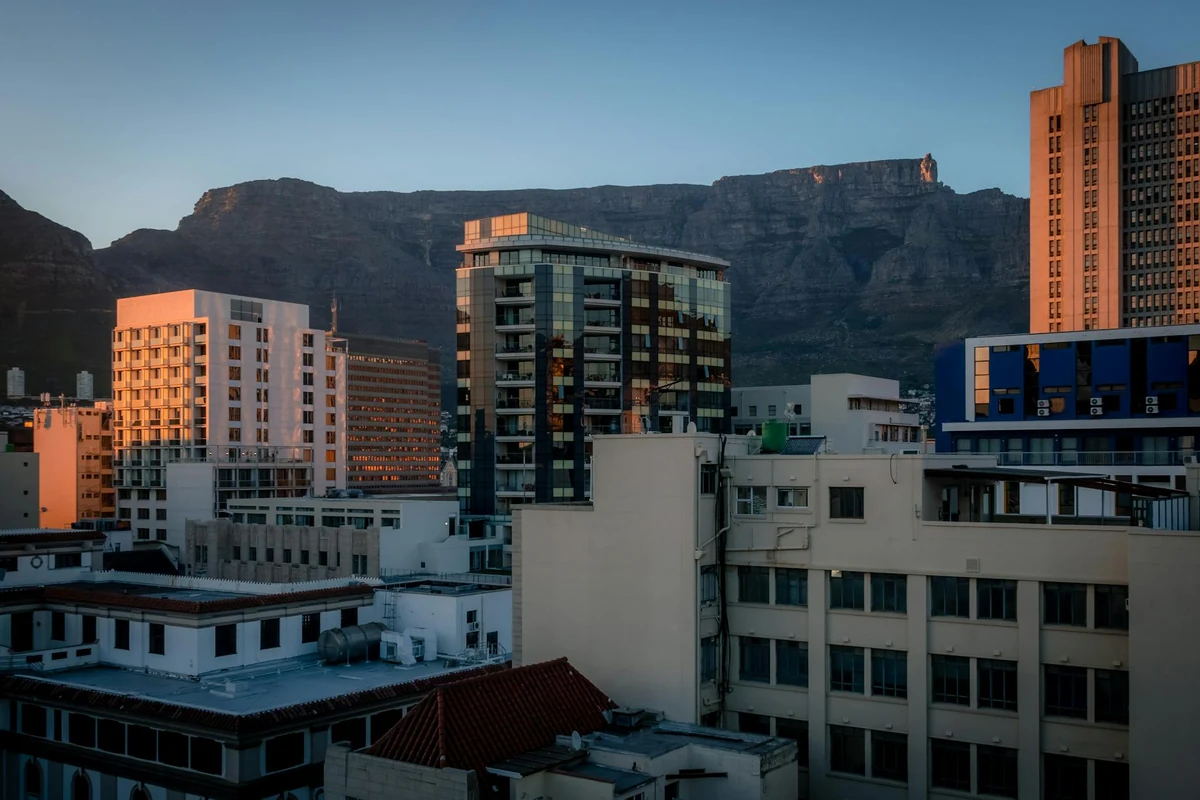
Cape Town’s housing market has been behaving like a city under intense pressure from every direction at once. Buyers are competing not only for homes, but for a lifestyle that many South Africans increasingly view as safer, better managed, and more future-facing than what they can find elsewhere. The result has been a sharp rise in prices across much of the metro, with especially strong movement in suburbs that offer security, space, schools, connectivity, and strong resale value.
That surge is not the product of one isolated factor. It is the outcome of economic strength in the Western Cape, migration from other provinces, changing work patterns, inflation concerns, and a market that still attracts local and foreign capital even when borrowing costs are high. For residents and investors alike, the key question is not just why prices climbed, but whether this new level is sustainable.
Why Cape Town Is Pulling Ahead
A big part of the answer lies in relative performance. The Western Cape has been growing faster than the country as a whole, and that matters in property. When a province shows stronger economic momentum, buyers usually read that as a signal of job stability, business opportunity, and better long-term demand for housing.
In 2023, the Western Cape’s economy expanded by an estimated 2.1%, while South Africa overall grew by only 0.6%. That difference may sound small, but in property markets it shapes confidence. The province also continues to post a lower unemployment rate than the national average, which supports spending power among those who are employed. The Western Cape’s reported unemployment rate of 20.3% in the fourth quarter of 2023 was still far too high, but it was notably below the countrywide figure of 32.1%.
Cape Town also benefits from a reputation that goes beyond hard numbers. Its governance record, municipal finances, public spaces, schools, universities, hospitals, and overall liveability all feed into buyer demand. For many households, the city represents a premium on reliability. Add the coastline, outdoor lifestyle, and strong cultural scene, and you get a market that remains desirable even when it becomes expensive.
Semigration Has Changed the Buyer Mix
One of the clearest drivers of Cape Town’s price growth is semigration, the ongoing movement of South Africans from provinces such as Gauteng and KwaZulu-Natal into the Western Cape. This is not a small trend. Lightstone data shows the Western Cape accounted for 35% of semigration in South Africa in 2023, with Gauteng providing the largest share of movers. FNB’s Property Barometer also estimated that semigrants were linked to 15% of residential sales in the Western Cape that year.
That flow of people affects prices in two ways. First, it increases the number of buyers chasing a limited pool of homes. Second, many of those buyers arrive with strong financial positions, especially households selling property in other provinces and upgrading in the Cape. That pushes competition up in the middle and upper segments of the market, where demand is already intense.
The typical semigration buyer is often looking for more space, security, good schools, and a neighbourhood that feels well run. That is why secure estates, family homes, and suburbs with strong infrastructure have seen such pronounced interest. The buyer profile matters because it is not only about relocation; it is about relocation with buying power.
Remote Work Has Reinforced Demand
The pandemic did not create Cape Town’s appeal, but it made that appeal easier to act on. Remote and hybrid work have loosened the link between where people live and where they earn their income. For professionals employed by firms in Johannesburg, Pretoria, or even overseas, Cape Town suddenly became a practical base rather than a holiday idea.
This has influenced the type of property people want. Buyers working from home are prioritising dedicated office space, stronger fibre connectivity, and homes that can support daily life without forcing them into dense urban compromises. Larger living areas, outdoor space, and access to parks or beaches now carry more weight than they once did.
This shift has helped areas such as Durbanville and Somerset West, where buyers can often find more space and a stronger value proposition than in the city’s most central districts. It has also benefited neighbourhoods that combine lifestyle appeal with practical commuting access, even if commuting now happens less often than before.
Higher Rates Did Not Break the Market
Usually, steep interest rate hikes cool property markets. In South Africa, the Reserve Bank’s repo rate moved from 3.5% in July 2020 to 8.25% by May 2023, a major jump that made mortgages more expensive and reduced affordability for many households. Yet Cape Town did not react like a normal overheated market would have.
The reason is that the city’s demand base is unusually resilient. Buyers there are not motivated only by cheap credit. They are also motivated by lifestyle, migration, investment, and the belief that Cape Town remains one of the safest places in South Africa to park capital over the long term. Even as financing became more expensive, price growth held up better than in many other parts of the country.
Inflation also played a role. South Africa’s annual CPI averaged 6.0% in 2023, which encouraged many investors to look for assets that could preserve value in real terms. Property has long been seen as one of those assets. For some buyers, especially in a market like Cape Town, buying a home was not just about shelter. It was about hedging against a weaker currency, rising living costs, and economic uncertainty elsewhere in the country.
Which Areas Are Leading the Surge
The strongest gains have not been evenly spread. Some parts of Cape Town have surged far ahead of others.
The Atlantic Seaboard remains the headline market. Clifton, Camps Bay, and Bantry Bay continue to attract high-income local buyers and international interest, with average house prices in that corridor rising by roughly 12% to 15% in 2023. That is the kind of growth usually associated with a premium global city market, not just a South African coastal one.
The Southern Suburbs have also remained highly competitive. Constantia and Bishopscourt still sit among the country’s most expensive suburbs, with average house prices above R15 million. Rondebosch continues to draw families who want better schools, strong amenities, and older homes with renovation potential.
In the City Bowl and nearby districts such as Gardens and De Waterkant, sectional title units and apartments have become especially attractive. These areas appeal to younger professionals, investors, and people who want central access with lower maintenance than a freestanding home.
Farther out, the Northern Suburbs and surrounding growth nodes have benefited from the value search. Durbanville, along with Somerset West in the broader Cape Town orbit, has seen strong demand from families and semigrants. Average property values in these areas rose by about 8% to 10% in 2023, helped by demand for estates, larger homes, and better affordability relative to the city’s prime coastal zones.
The Affordability Problem Is Getting Worse
The most immediate consequence of the price surge is exclusion. Many local buyers are being pushed out of neighbourhoods they have long regarded as home. First-time buyers, young professionals, teachers, nurses, municipal workers, and other middle-income households are finding it harder to qualify for loans or save for deposits.
In parts of the city, house prices have risen more than 30% over the past three years, while salaries have not kept pace. At the same time, the rental market has tightened. Average Cape Town rentals increased by 7.6% year on year in 2023, compared with a national average of 4.5%. For many residents, buying is becoming impossible and renting is becoming more expensive at the same time.
The social impact is not trivial. Areas such as Woodstock and Salt River have transformed rapidly over the past decade, with property values climbing by more than 150%. That kind of change can bring new investment and improved amenities, but it can also alter the identity of a neighbourhood and displace long-standing communities. As prices rise, so do rates, insurance, and general cost-of-living pressure.
What Comes Next
The outlook for Cape Town remains positive, but the pace of growth is likely to ease. Analysts from firms such as FNB and Lightstone still see the city as South Africa’s strongest residential market, but they expect the next phase to be more measured than the recent boom. A forecast of 5% to 7% growth has been suggested for 2024, which would still beat the national average without repeating the double-digit jumps seen in some areas.
The reasons for that continued strength are familiar: semigration, relative economic stability, strong lifestyle demand, and a market that still enjoys investor confidence. Pam Golding Properties continues to point to demand in the luxury segment, especially from high-net-worth buyers and foreign purchasers. At the same time, a healthier development pipeline in places like the City Bowl and the Northern Suburbs may help slow the mismatch between supply and demand.
The main risks are also clear. If the national economy stays weak, if rates remain elevated for longer than expected, or if infrastructure struggles to keep up with population growth, affordability will worsen further. Yet Cape Town’s appeal has proved durable through rate shocks, inflation, and wider uncertainty. That makes the city less of a speculative story and more of a structural one.
For buyers, the lesson is simple: Cape Town is no longer a market where prices move only with credit conditions. It is a market shaped by migration, governance, lifestyle, and scarcity. Anyone looking to buy, invest, or plan a business presence in the city needs to understand that those forces are now setting the terms.